+27% operational efficiency  ·  −38% time on manual tasks

Your business has grown.
Your processes haven't.

We design the operating system of your company so you can grow with clarity and control, without depending on key people or processes that fail when you need them most.

This is not a trend. It's a transformation. · The future of business is being redefined · This is not a trend. It's a transformation. · The future of business is being redefined · This is not a trend. It's a transformation. · The future of business is being redefined · This is not a trend. It's a transformation. · The future of business is being redefined ·
Savings calculator

How much time does your company
waste on manual tasks?

20h/wk
10people
30 hours saved per month
9.000€ estimated annual savings

* Estimate based on a 38% reduction in manual tasks and an average cost of €25/hour.


01

Your team works hard, but not efficiently

When there are no clear systems, effort doesn't translate into results. Without the right methodology, work doesn't scale.

02

Your processes are disorganized

Lack of structure generates recurring errors and friction. Every task depends on who does it and how.

03

Your operations rely on manual processes

As you grow, manual tasks multiply. What worked with 5 people doesn't work with 20.

04

Your business depends on key people

When knowledge is in the heads of a few people, the business is fragile. If someone leaves, everything stops.

The problem

Does this sound
familiar?

Many companies want to grow, but their way of operating is not ready to scale. Without an Integraly system, you miss opportunities and scale the chaos.

Request the diagnosis

The method

4 steps to transform
how your company operates

We first understand how your company works and then design a system that allows it to operate better and scale.

Step 01

Diagnosis

We analyze how your company really works: processes, tools, teams and operational friction.

Step 02

Decision

We identify which changes generate the most impact and define where to intervene first.

Step 03

Implementation

We design and implement improvements in processes and systems to optimize operations.

Step 04

Support

We measure results and adjust the system so the company keeps improving.

Case studies

Real implementations
in companies

How we design and implement AI-powered automated systems

Caso 01
Result achieved
faster
40 min 5 min

Automation of registration and report generation

WhatsApp-based system that automatically organizes images, structures files and generates reports in minutes. What used to take nearly an hour now runs on its own.

Caso 02

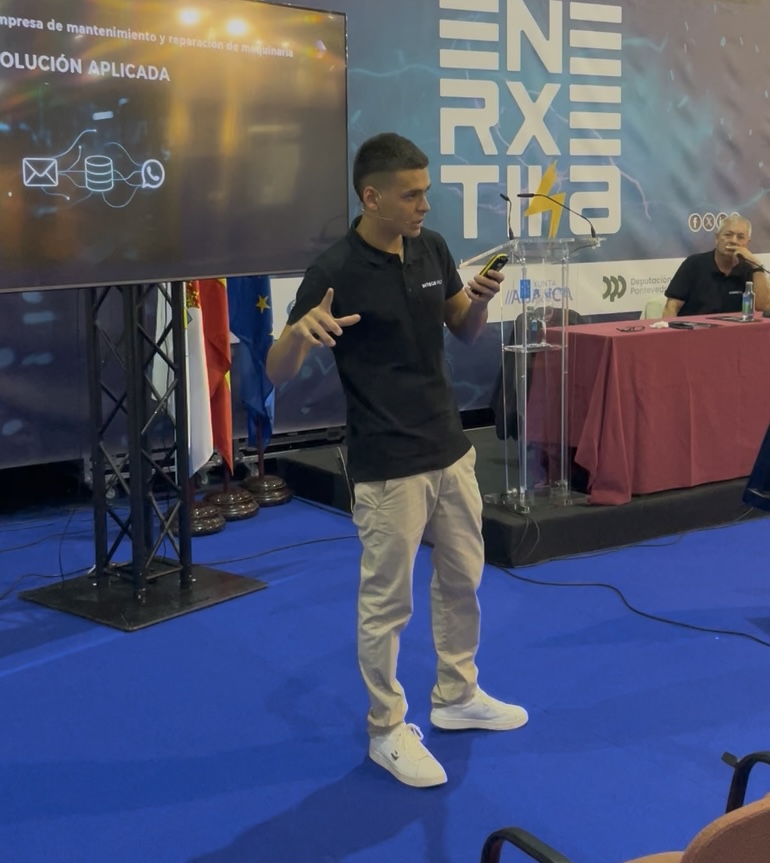
Intelligent notification management system

Before
  • Manual handling of each notification
  • Information scattered across emails
  • No visibility of actual status
After
  • Automatic management via WhatsApp
  • Everything centralized in a database
  • Real-time visibility of the team

AI system that filters emails, centralizes notifications and manages technician assignment and tracking via WhatsApp. Without changing how the team works.


About us

The approach behind
our work

We are not a technical agency that sells automations. We are operational consultants who first understand how a company works and then design the system that allows it to grow without losing control.

The difference is in the diagnosis. Many implement without understanding. We understand before implementing anything.

Eloi Navarro — Solutions Director, INTEGRALY
"The problem with most companies is not the lack of tools. It's that nobody has taken the time to design how they should work."
Eloi Navarro Solutions Director

Contact

The first step
is to understand.

Before proposing anything, we need to understand how your company works. That's why we always start with a diagnosis.

Integraly Core™

The structured diagnosis of your operation

We analyze how your company really works — processes, tools, friction and dependencies — and deliver a concrete action plan.

01 Initial conversation to understand your situation
02 Analysis of processes, team and tools
03 Delivery of concrete proposal with fixed price
It's not a demo. It's not a sales call. It's a diagnosis.
Frequently asked questions

FAQs

How much does working with Integraly cost?

+
The cost depends on the project scope. The process always starts with the Integraly Core™ diagnosis, with a fixed price. After the diagnosis, we present a concrete proposal with a closed price, no surprises.

How long does implementation take?

+
The diagnosis lasts between 2 weeks and 2 months, depending on the client's involvement. Implementation is always agreed with concrete deadlines before starting.

Do I need to have my own technical team?

+
No. We handle everything: design, development and implementation. The systems are so easy to use that anyone on your team can work with them from day one.

Do you work with companies in my sector?

+
We work with companies in very different sectors: services, industry, logistics, consulting, retail and more. What matters is not the sector, but that there are repetitive processes that can be optimized.

What if I don't see results?

+
We define together what success means for your company and measure results objectively. If something doesn't work, we adjust the system. Our support model ensures results are maintained over time.

Why start with a diagnosis and not directly with automation?

+
Automating without understanding the problem is the most common cause of failed projects. The diagnosis identifies exactly where the real problem is and which solution generates the greatest impact.

Are we obligated to implement with Integraly after the diagnosis?

+
No. The Integraly Core™ diagnosis is an independent service. You will receive a complete report with the recommended solutions and can implement them with us or with whoever you prefer.

What kind of improvements can be achieved with these systems?

+
The most common results for our clients are:
  • Significant reduction in manual work
  • Greater control over internal processes
  • Real-time visibility of what is happening in the company
  • Reduction of operational errors
  • Time savings on administrative tasks
  • Ability to scale without increasing chaos